

Percutaneous Mitral Valve Replacement Research Program at the Inter-Balkan Medical Center
Thessaloniki, October 29, 2021 – The percutaneous replacement of the mitral valve of the heart with the innovative ALTAVALVE valve was undertaken exclusively in Greece, as part of a research program, by the 2nd Cardiology Clinic of the Inter-Balkan Medical Center, headed by Interventional Cardiologist Vlasis Ninios.
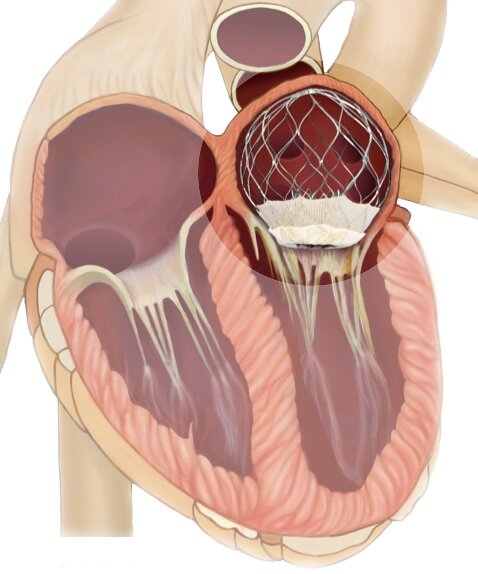
In particular, the American company 4C MEDICAL assigned this Clinic to perform procedures as one of the 2-3 corresponding Cardiology Centers in Europe for the implementation of a research program concerning purely percutaneous mitral valve replacement in patients for whom there is no other therapeutic option. These are high-risk patients for cardiac surgery to replace the mitral valve or unsuitable for percutaneous repair with another type of valve. Such patients are usually elderly with heart failure, mitral valve insufficiency, pulmonary hypertension or patients with a high concentration of calcium in the mitral valve.
The innovative ALTAVALVE valve promises, based on its design, to be applicable to the majority of patients and to offer a successful mitral valve replacement result with low risk and very rapid recovery for the patient.
It should be noted that patients, if deemed suitable during the free pre-operative screening, also participate in the operation to place the new ALTAVALVE valve for free.
On the occasion of the training on the characteristics of the new valve by its manufacturers themselves who came to the Inter-Balkan Medical Center of Thessaloniki from the USA, the Director of the 2nd Cardiology Clinic, Mr. Vlasis Ninios, stated:
“The American company 4C MEDICAL chose our Clinic and the Inter-Balkan Medical Center due to our extensive experience in research programs for the percutaneous placement of innovative valves for the treatment of heart failure. This is not a primary research application of the valve, but its percutaneous passage through the femoral artery, while until now its insertion was done through a small incision in the chest. Its innovative features are different from any other valve that exists or is currently being tested in clinical studies, internationally.
We are particularly happy to be able to help patients who until now had no choice for another operation. In all other valves that we use in the context of research programs, after pre-operative testing, only 30% of patients meet the criteria for the placement of another valve. The criteria are very strict and in no case do we jeopardize the safety of patients, even if they have no other choice or if the program is free for their participation because it is covered by the respective valve manufacturer. We are proud to have this option, in addition to the other valve programs that we are already implementing and that concern heart failure. We are laying another stone in the promotion of science and research”.
As Mr. Vlassis Ninios explains, the valve is placed inside the left atrium at the back of the heart, above the mitral valve. The placement mechanism is the gradual opening of the valve from the height of the native valve annulus to the back, to the roof of the left atrium. The opening is slow, gradual, completely safe and the possibility of repositioning is given, if necessary, even in the last stage before the release of the device, in its final position. No contrast agent is used at all as the placement is guided by transesophageal ultrasound.
- For additional information, please contact the Inter-Balkan Medical Center of Thessaloniki (2310 400000) and the 2nd Cardiology Clinic (2310 400 929).


